Fresh Start Eraser & Sharpener Set for Study Notes & Creative Sketches
Fresh Start Eraser & Sharpener Set for Study Notes & Creative Sketches
Couldn't load pickup availability

Fresh Start Eraser & Sharpener Set for Study Notes & Creative Sketches
✏️ Your first idea does not have to be your last.
A sketch can change direction. A diagram can begin with a question. A page of pencil notes can hold the thinking that happens before the answer feels clear. Fresh Start belongs beside that unfinished part of the process.
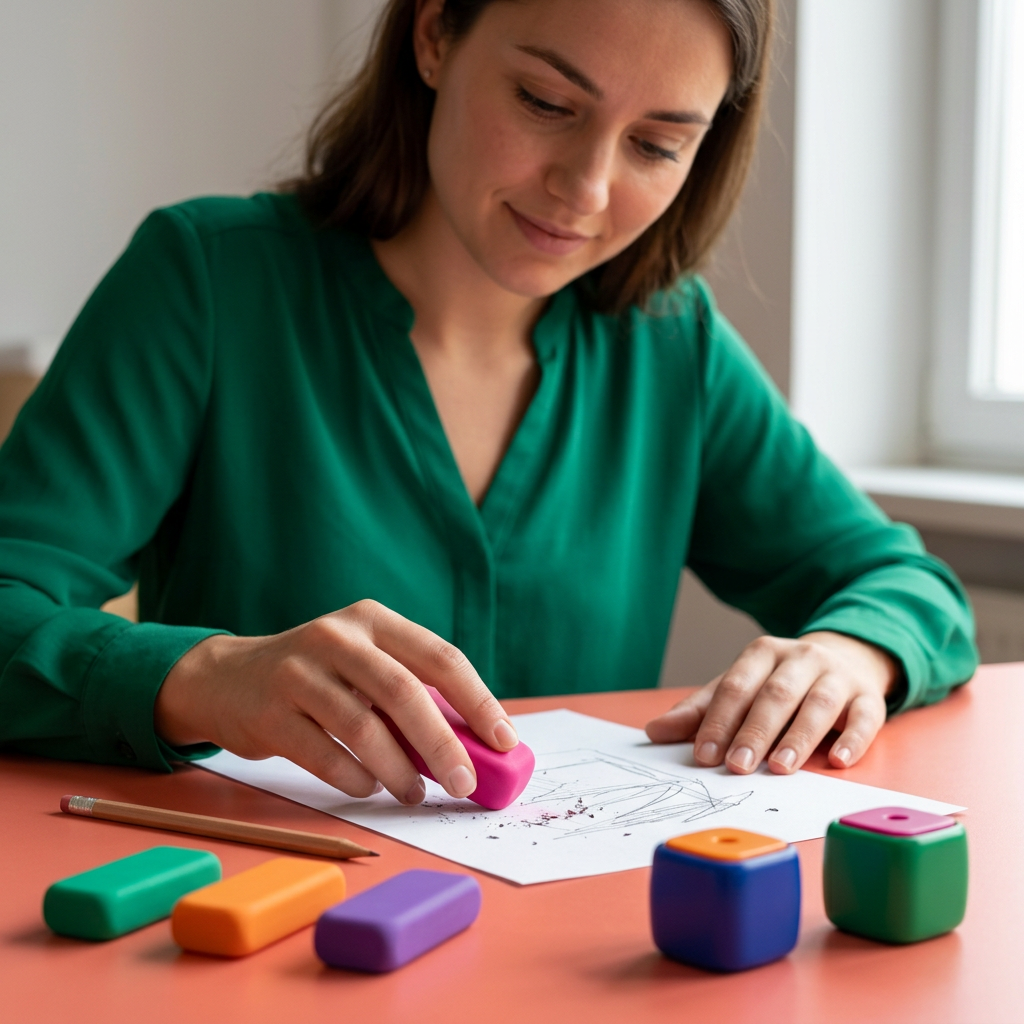
The colorful design pairs simple block-shaped erasers with compact, contrasting-color manual sharpeners. Green, orange, violet, magenta, and cobalt bring a lively detail to the small tools on the desk, without relying on a printed message to make the space feel personal.

Make room for a second attempt
It is easy to expect the first marks on a page to look like a finished result. Give yourself a different starting point: a practice sheet, a small question, and permission to explore an approach before deciding whether to keep it.
Revision can be a useful part of working in pencil. Look at the idea behind a line before changing it. Is the relationship unclear? Does the arrangement need more room? A small observation gives the next attempt a purpose beyond simply making the page look different.
🟢 For a study session still finding its shape
When a topic feels complicated, begin with what you can explain in your own words. Sketch a simple diagram, write a short example, or separate the question into smaller parts. Leave space around the first attempt for the connections that emerge later.
Keep the assignment instructions and required tools in mind. Follow the guidance given for the task, and use a separate practice page when you want to try a different approach. Your working notes are a place to develop understanding rather than perform a perfect answer.

For the sketch before the sketch
Choose an ordinary object on the table and notice its largest shapes first. Make a small, light study of the outline before exploring the details. Compare the proportions you have drawn with what you actually see.
Pause before making a change. Sometimes the drawing needs a different line; sometimes it needs another moment of observation. Let the decision come from looking rather than from the feeling that every mark should be immediately finished.
🟣 A short pause in the pencil routine
Preparing your tools can be a moment to reconsider the work in front of you. Set the page aside briefly, check the pencil you are using, and decide where you want to begin again. Follow the instructions and compatibility guidance for your actual tools.
When you return to the drawing or notes, choose one specific thing to explore next. A clear next step can be more helpful than attempting to improve the whole page at once.

Three ways to approach a fresh page
Ask a smaller question
Instead of trying to solve the entire project immediately, select one relationship, one shape, or one example. Give it enough attention to understand what it contributes to the larger idea.
Compare two possibilities
Draw two small versions of a layout or diagram on practice paper. Notice how the arrangement changes the way you read it. Keep a short note about what you prefer and why.
Leave a useful trace of your thinking
Write down a decision you made during the session. It might be an approach you want to continue or a question you need to investigate. A little context can make the next session feel like a continuation.
A colorful corner for everyday tools
The expressive palette brings a bright contrast to a desk full of papers. The uncomplicated shapes let the colors carry the visual character, whether your workspace is otherwise quiet or already filled with stationery you enjoy.
Choose a consistent place for the tools when the session ends. It does not need to be an elaborate system. A simple return routine gives the small pieces somewhere to belong while the rest of your project develops.
🟠 Better conversations about unfinished work
When studying or drawing with someone else, try showing an early attempt rather than waiting until you are satisfied with every detail. Explain what you are trying to communicate and ask a specific question about the part you are exploring.
Compare ideas without turning the discussion into a competition for the most polished page. An unfinished diagram can reveal a useful question, and a rough sketch can invite a suggestion that a finished-looking composition might not.
Let the session end with intention
Look back at the page before putting it away. Notice one thing you understand more clearly and one thing that still needs time. Write both down if they will help you return to the work.
Gather the tools, set the papers in their chosen place, and leave the next task with enough context to begin. You do not need to finish every idea to finish the session thoughtfully.
🌈 A small gesture for someone who keeps exploring
Fresh Start is a stationery choice for people who enjoy pencil work, colorful tools, and the freedom of developing an idea on paper. It can be a thoughtful detail for the beginning of a semester, a new drawing habit, or a creative project someone wants to make time for.
Pair it with a separate handwritten note encouraging them to keep trying the ideas that interest them. Or choose it for your own desk as a colorful companion to the pages that are still becoming something.
Begin again, with something you have learned
The next attempt does not have to erase the value of the first. Keep the observation, reconsider the line, and make the next mark with a little more intention. There is room on the page for your thinking to change.
Pencils, papers, and other styling accessories shown in lifestyle images are not included.